

Literacy
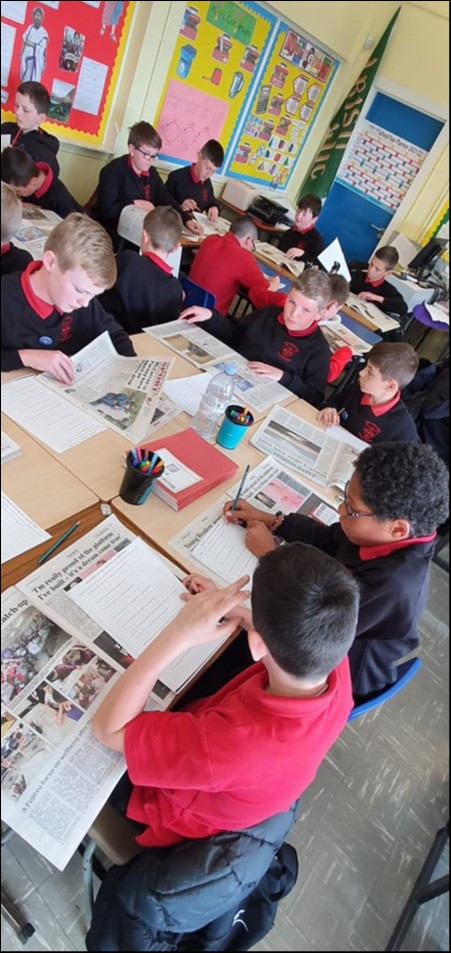
We at Holy Cross Boys’ believe that Communication is a life-long process. It is concerned with the development, use, shaping, refining and enjoyment of language – spoken, heard, written and read.
We therefore see and take opportunities throughout the day for developing communications in children, both formally and informally.
Through Communication our aim is to develop the children’s knowledge and understanding, concepts and skills in all four modes of language: talking, listening, reading and writing. In doing so, we will enable children to interact effectively in the world around them, to express themselves creatively and to communicate confidently.
Through each of the attainment targets, teachers are instructed to vary questioning for their pupils using the Bloom’s Taxonomy model to achieve a higher level of understanding of their work.
This philosophy is expected through oracy and written work so that pupils are exposed to low and high cognitive questioning so that they know not only how to reproduce work but also to provide reasons through judgements and creative responses.
SPECIFIC AIMS
AT1 Talking and Listening
Our aims are to develop each child’s ability to:
¨ listen to questions that demand low-high cognitive reasoning and take part
in discussions, explanations, role-plays and presentations:
¨ contribute comments, ask questions and respond to others’
points of view:
¨ communicate information, ideas, opinions, feelings and
imaginings, using an expanding vocabulary;
¨ structure their talk and speak clearly so that ideas can be
understood by others;
¨ adapt ways of speaking to audience and situation;
¨ use non-verbal methods to express ideas and engage with the
listener.
We will provide the children with contexts for the development of talking and listening skills: personal, factual, imaginative & social
AT2 Reading
We aim to
¨ develop in the children a positive attitude to and enjoyment of
reading
¨ develop the children’s independence in reading at increasing
levels of difficulty
¨ develop the children’s efficiency in the use of books and other
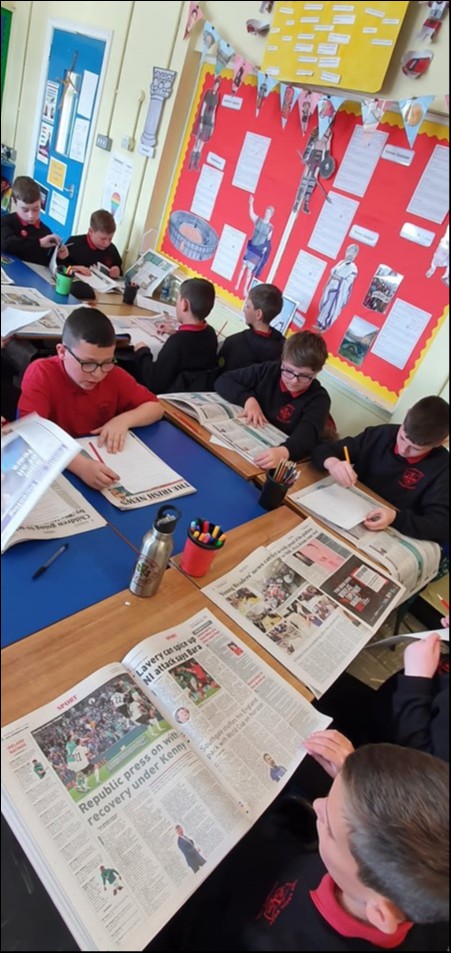
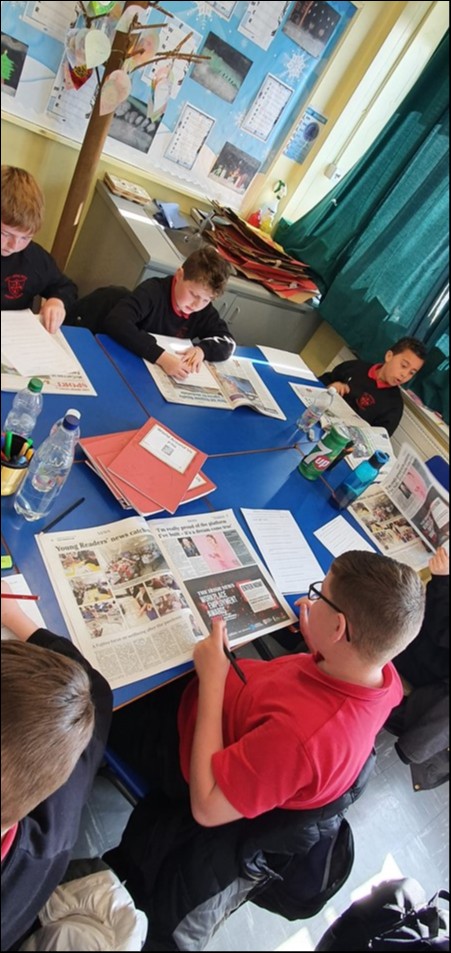
written sources to obtain information
To these ends, we aim to
¨ provide a wide range of stimulating reading material
¨ develop decoding skills
¨ develop comprehension skills
¨ develop skills in finding and using appropriate sources of
information
¨ develop an appreciation of the use of language: aesthetic,
persuasive, informative etc.
¨ develop in the children a critical faculty towards reading
matter
¨ make the children aware of published writers, by meeting
authors, journalists, editors etc.
¨ provide different contexts for reading:
- sustained, silent
- aloud to another individual / group
AT 3 Writing
We aim to
¨ develop the children’s interest and competence in writing as a
form of communication
¨ develop their awareness of the audience and context for
which they are writing
¨ develop their skills in a range of forms of, and purposes for,
writing
To these ends, we aim to develop
¨ increasing independence in writing
¨ the ability to plan, organise and structure their writing
¨ a critical attitude to their own writing which leads to the ability
to edit, redraft and refine their writing
¨ an awareness of different forms, styles and language
appropriate to different contexts and readerships
¨ legible and aesthetically pleasing handwriting
¨ accuracy in spelling
¨ correct use of grammatical conventions
¨ an ability to use word processing
Holy Cross Boys' PS, Brookfield Street, BT14 7EX
Phone: 028 9035 1032 | Email: holycrossboys@hotmail.com